This would be a follow on of the previous post on battlefield interdiction.The aim is to develop a concept aircraft which can be developed, qualified and put into service as soon as possible within the budget using readily available COTS items and technologies developed for other programs such as the LCA, Jaguar Darin III,Combat Hawk. It would be survivable against the most common threats and to detect and avoid the most advanced threats.
Mission Profile:
To carry out
1. Strikes on the logistic ,artillery and support units which are of importance to the adversary in the Forward Edge Battle Area(FEBA).
2. Suppression of Enemy Air Defences(SEAD),Destruction of Enemy Air Defences(DEAD)
3. Reconnaissance/Target Designation , Electronic Intelligence , Communication Intelligence , Electronic Support Measures.
4. Anti Shipping.
5. Air Defence against low flying helicopters, UAVs and other slow aircraft.
6. Advanced Jet Training/Weapon Delivery Training.
7. Aerial Refueling.
Principle Requirements:
1. Light weight,small , simple,rugged and agile.
2. Ability to carry out precision strikes with long range weapons on land and at sea.
3. Specific variants for night attack, SEAD/DEAD, recon, antishipping.
5. Capable of taking off from highways and semi paved runways.
Easy to maintain, low cost of ownership, high sortie generation rates.
4. Affordable and built with technology available in India.
Survivable against current and emerging threats.
Good payload and combat persistence.
Operations research:
1. Most(more than 60-80%) of the combat losses of aircraft in Vietnam war, Yom Kippur war, Gulf Wars, Kosovo,Chechen War ,Crimea have been primarily to low cost air defences like Anti Aircraft Artillery(AAA), MANPADS. Aircraft which presented a small visible surface area and were more manuverable where found to be survivable against AAA threat .Eg: the A-37 Dragonfly, Focke-Wulf 189. The effectiveness rates for large SAM's were relatively low and went lower as the expensive stocks got depleted , but they were effective in bringing the aircraft into AAA engagement envelopes.Thus low cost defence were more effective in the presence of SAMs even though SAMs themselves were not that effective.
2.Most of the aircraft losses to ground fire were due to control surface failures and fires caused by fuel, hydraulic liquid.
3.80% of the aircraft were shot down by surprise at close range so all round cockpit visibility is critical.
4. It is to be understood that simple aircraft attained higher operational readiness and generated more sorties in all wars. Eg: The A-10 had an availability rate of more than 90% , which far higher than other aircraft including helicopters.Stealth aircraft demonstrated poor availability. A-10 generated 12,400 sorties in the gulf war as compared to the 2,600 of the F-117.
5.Crew of two provides lessens the pilot workload during strike missions as they invovle multiple functions simultaneously. It also provides an additional eye in the sky.
6. Payload carrying strike aircraft in all wars could not go supersonic due to the excessive drag created by the pylons, weapons and drop tanks but sometimes went supersonic after jettisoning the payload.
7. Indian weather conditions are mostly clear and sunny round the year so it is unnecessary to make all the aircraft all weather capable
8. Precision weapons had limitations in their use.PGMs such as LGBs, JDAM, HARM were countered with smoke generation, decoy radio emitters, GPS jammers. Precision weapons were only as good as the coordinates provided to them by the intelligence.
Inspirational Platform:
Considering the above requirements we take a proven design as our inspiration and base our concept around it. The A-4 Skyhawk designed for the US Navy and Marines by the legendary aircraft designer Ed Heinemann who designed it as per his policy of "Simplicate and Add Lightness".
Some of his design choices made the A-4 a light,simple,robust, high performance,survivable workhorse which flew the most number of sorties of any navy aircraft and also suffered the most number of losses. That is not a measure of its vulnerability but rather the percentage of A-4s returned home after getting hit was higher than any other jet aircraft aircraft in the US Navy during Vietnam.
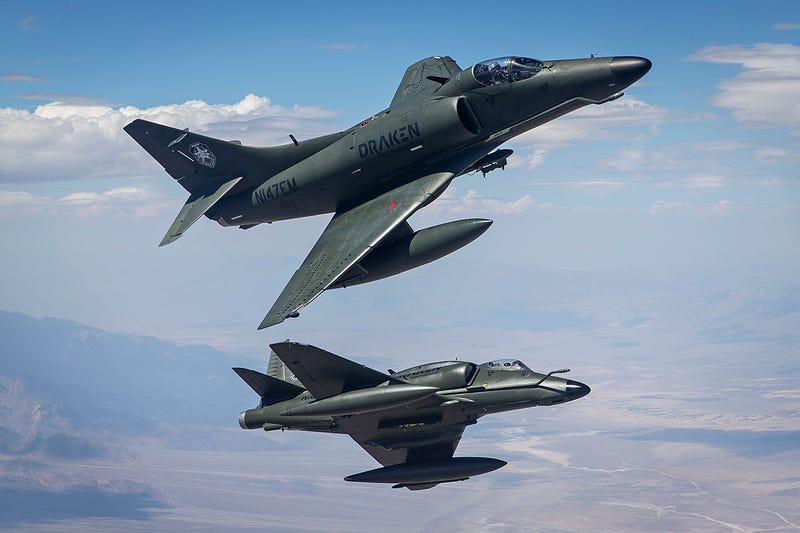 The A-4 Skyhawk. Courtesy - http://foxtrotalpha.jalopnik.com/
General specifications of the aircraft:
The aircraft empty weight - 4000 kg
Payload - 4 tons with 5 hard points for fuel and weapons.
Crew - 2
Top Speed - Mach 0.8-0.9
Airframe Design:
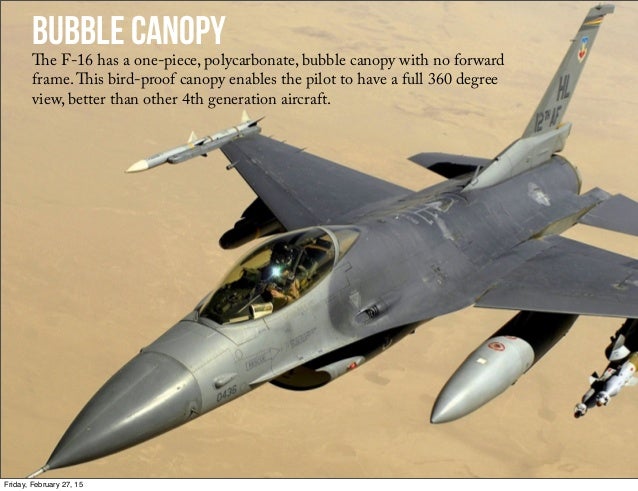
The aircraft will use a delta/cropped delta tail cruciform configuration. The solid delta wing provides the structural strength, low drag, space for fuel and good agility. The aircraft will a stable design with no fly by wire as the design is agile as a result of the delta wing and lower inertia due to low weight. The cockpit canopy will be a bubble glass canopy similar to the F-16, Rutan ARES with all round visibility for the pilot providing optimal situational awareness.
The airframe will be built with Aluminium as it is readily available and the people who are experienced with it are in plenty, the subsonic requirement and the strong delta wing allow the use of cheaper,less exotic materials .Weight reduction will be primarily through detailed design,weight budgeting through various design/analysis tools.Low cost composites like fiberglass over foam used by Burt Rutan and Scaled Composites in their low cost home built designs can be used in certain areas instead of more expensive autoclave or even resin based composites.
 The low cost all Composite Rutan ARES. Courtesy - http://www.knifeedge.com/
Electric and hydraulic actuators with manual backup will be used to move the control surfaces, to reduce the overall weight the electric actuates will be the primary boost mechanism the hydraulic actuators will provide the control surface feedback to the pilot.The electric actuators need power generation which will be provided by an auxiliary power unit(APU).The leading edge slats will be gravity operated such that they drop when the air speed decreases and revert back under friction at high speed just like in the A-4 but has to be tweaked such that both slats drop at the same time so that the moment created with on slat dropping earlier than the other is prevented.
 The Gravity Operated Leading Edge Slats.Courtesy - https://en.wikipedia.org/
The air intakes will be simpler as the aircraft is not meant to be supersonic and thus the problem of boundary layer separation is not very significant.The sides of the air intake will have doors for additional air during take offs with high payload or at high altitudes.Fixed aerial refueling probe mounted to the side of the nose not obstructing the view of the pilot.
Landing Gear:
A tricycle landing gear with all three wheels folding forward so that even if there is a hydraulic leakage they will drop down by the friction of air.The rear wheels are wide with low pressure run flat tires to enable landing on semi paved or even unpaved runways. The landing gear excluding the wheels dont penetrate into the wing spar thus keeping the wing strong and the struts are housed within a fairing under the wing. The hydraulically operated main landing gear doors can be made to act like air brakes(as in the folland gnat) eliminating the need for a dedicated landing gear ,thus saving weight.
 A-4 Skyhawk Landing Gear.Courtesy - http://www.defensemedianetwork.com
Propulsion:
Propulsion would be an in service non afterburning turbofan engine.In case of single engine the options would be non afterburning versions of the M88, GE-404,RD-33, Kaveri "Ghatak" variant(if available) or in the case of the twin engined configuration the options would be the F-124,Adour, HTFE-25(if available).Full Authority Digital Engine Control (FADEC) is optional and preferrebly eliminated to prevent electronic obsolescence of the FADEC electronics affecting the availability of the engine itself.Other forms of engine control should be explored.The engines would provide very good combat persistence and range as in the Singaporean A-4SU. The aft section of the aircraft woould be removed to access the engine for maintenance or replace to replace it.This reduces complex doors and latches to access the engine thereby reducing weight. The engine will be started by an external starter which will be a part of ground support equipment ,inflight restart will utilize windmilling.
Avionics:
Electronics will be kept modular and will not be highly integrated which will complicate addition or replacement of existing electronics as the central computer has to be reprogrammed to accept the new item.Maximum use of COTS components in a modular way.
Baseline day variant :
The Mark 1 eyeball or the human eye would play a big role in situational awareness locating aircraft, missile launches and targets with a bubble glass canopy.
Laser Altimeter for the pilot.
A gimbal TV sensor coupled with a Laser Range Finder(LRF) for the weapons officer.
SEAD/DEAD/Antiship variant sensors:
The Siva direction finding pod or any other similar pod for cueing anti radiation missiles.
 Siva High Accuracy Direction Finding Pod. Courtesy - https://forums.bharat-rakshak.com
Night Variant sensors:
Fixed navigation FLIR+Laser Altimeter for the pilot.
Gimbal FLIR coupled with LRF/Compact low power ranging radar for weapons officer.
Communication:
Software Defined Radio(if it is not slow to boot and does not hang) or any other secure VHF/UHF radio.
Operational Datalink (ODL) to share off board information.
Internally mounted APK-9 Tekon weapon guidance datalink.
Self protection suite
360 deg coverage Wing tip+Tail mounted Digital Radar Warning Receiver (RWR)+low power DRFM Jammer like the Gripen E providing better coverage and reduced interference.The RWR should be capable of detecting,identifying and classifying AESA and other LPI radars at long range.Also used for cueing Chaffs.

 Wing tip mounted RWR/emitter locater and Jammer. Courtesy - http://www.f-16.net/forum/
360 deg Wing tip+Tail mounted dual colour IR Missile Approach Warning System(MAWS) to reduce false alarms. Also used for cueing DIRCM(optional) and IR flares.
Laser Warning Receiver(LWR) to warn of airborne and ground based Laser ranging for missiles and AAA.
RF and Laser proximity fuse jammers. Although it is a last ditch effort , it can reduce the Probablitlity of kill significantly by disrupting optimal warhead detonation.
Towed decoy/ towed Jammer.
Cockpit Interface:
The combat hawk variant cockpit interface built by BAE/HAL can adopted off the shelf.The pilot would have a Head Up Display(HUD) for flight data and the gun,Helmet Mounted Sight(HMS) with for the Air to Air Missile and optionally for the gun,1 or 2 Multifunction Displays(MFD) for flight instrumentation/navigation FLIR, two small displays for the Radar Warning Receiver(RWR) and the Missile Approach Warning System (MAWS), Hands on Throttle and Stick(HOTAS). This will present the overload of information.
The rear wepons operator/Navigator will have display for the TV sensor/FLIR/Direction finding pod and the LRF/ranging radar, One moving map display for navigation.
Night/All weather Variant:
Night vision capable cockpit with the crew having a 3rd gen II tube based night vision binocular.
 The Combat Hawk Cockpit. Courtesy - https://thaimilitaryandasianregion.wordpress.com/
Others:
TACAN, Ring laser gyro based Inertial Navigation System + GPS navigation.
Flight Data Recorder.
Specific Stores Management for specific variants. Eg: Only the SEAD variant has the stores interface and management for the Kh-31 Anti Radiation Missile ,other variants don't.
Survivability features:
The cockpit and the engine is armoured with lightweight composite armour against small arms fire upto 12.7mm projectiles and airburst splinter and the canopy is bullet resistant in the front.
The control surfaces have redundant flight controls with a manual backup in case the hydroelectric controls fail.
The Air frame itself doesnt not crack or shatter on impact but rather allows the projectiles to go though them by punching holes thereby preventing structural damage.
No fuel is stored in the fuselage near the engine , the fuel tanks in the wing are self sealing and filled with foam to prevent fire.The hydraulic fuel used will not be flammable.
A composite non heat conducting tail pipe extension like ARES or the Israeli A-4s which can minimise the effect of the small warhead present in the MANPADS on the aircraft engine and tail control surfaces.
 The extended A-4 tail pipe. Courtesy - http://www.britmodeller.com/forums/
Crew accommodation:
The cockpit will be air conditioned in all variants and will have high altitude environmental control system only for certain variants as in the other areas they would operate at low to medium altitude just like the A-37 dragon fly which flew combat sorties with no environmental control system for the crew.
Martin Baker Zero-Zero ejection seats for the crew.
Payloads:
Base daylight variant :
KH-29T/TE
KH-59M
KAB-1500TK
KAB-500SE
Griffin LGB(designated by an offboard source as on board designation restricts aircraft maneuverability and makes the aircraft vulnerable to ground fire)
HSLD 250, 450 100kg OFAB dumb bombs
Retarder bombs for low pass attacks avoiding AAA and SAM tracks.
Subsonic drop tanks, Centre mounted air to air refuelling buddy store.
R-73 or ASRAAM or Python-5.ASRAAM may be preferrable because of the high resolution Focal Plane Array seeker which handles ground clutter better, Russians have refused to provide the source code for thr R-73 in the LCA program.
Single 30mm GIAT-30(high muzzle velocity and good initial rate of fire) with 200-300 rounds.
 Kh-39 with APK-9 datalink pod. Courtesy - http://www.ausairpower.net
Night variant
KH-59M2E(IIR/low light CCD)
SEAD variant:
KH-31P anti radiation missile.
Antishipping variant:
KH-31P against shipborne radar with siva DF pod.
KH-31A cued using Siva Pod and range provided by ranging radar
KH-59MK cued using Siva Pod and range provided by ranging radar.
COMINT/ELINT/ESM/EA/Recon variant:
The Passive sensor/Intel suite developed for the NETRA AWACS mounted internally or externally.
DARE High Band Jamming Pod mounted externally
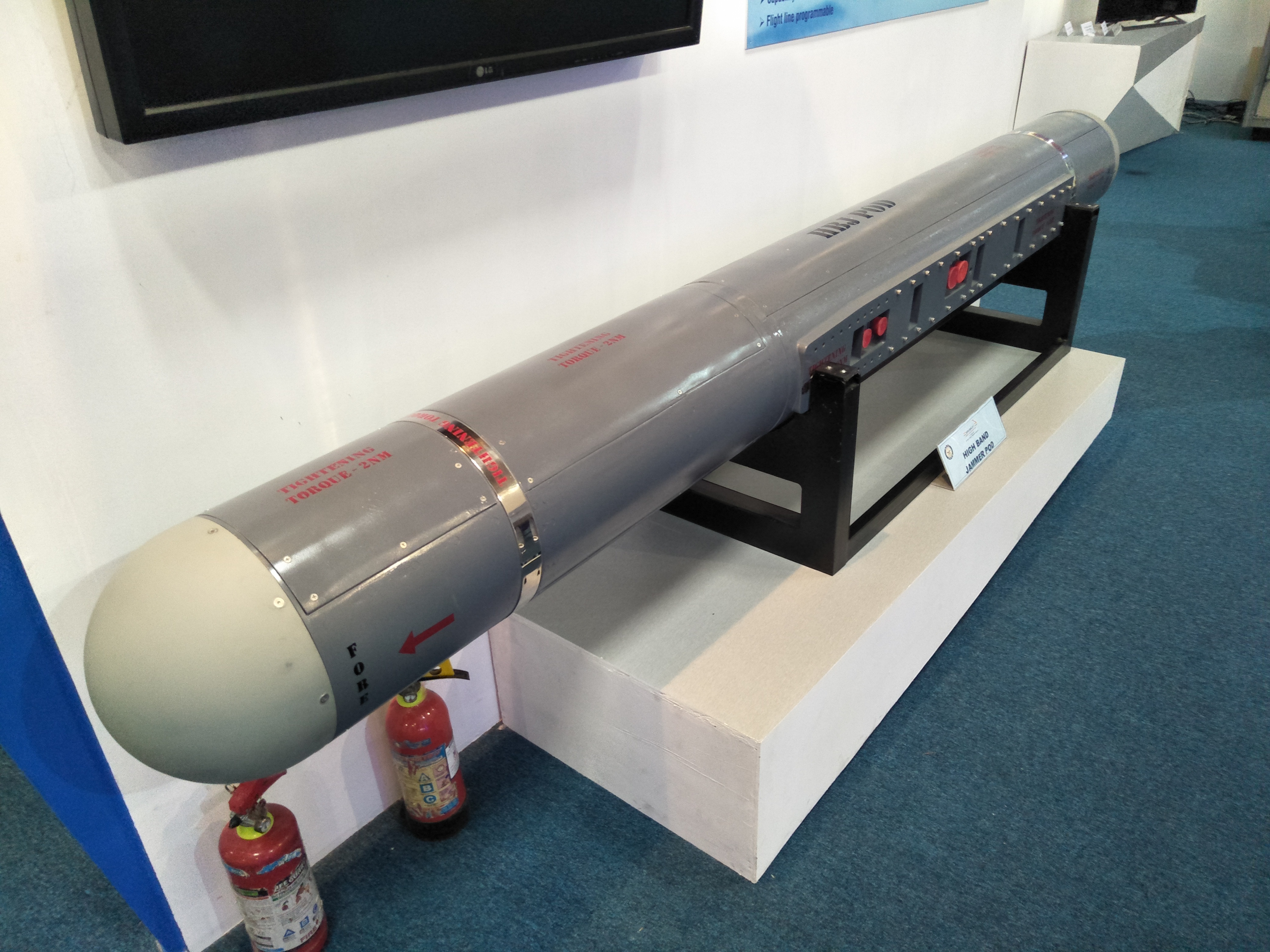 DARE HBJ Pod. Courtesy - http://www.nairaland.com
Rafael Reccelite recon pod.
Conclusion:
The concept may not look flashy but it was never meant to be. Such an aircraft can be designed, developed and operationalised through a competitive process with the entire funding of the prototypes brought in by the Indian private companies themselves. Govt funding at most times produce bloated systems which are too big to fail.This will be a more conservative design philosophy which marks a departure from the "I too have it " mentality we usually adopt vis-a-vis current western aircraft designs.
Mission Profile:
To carry out
1. Strikes on the logistic ,artillery and support units which are of importance to the adversary in the Forward Edge Battle Area(FEBA).
2. Suppression of Enemy Air Defences(SEAD),Destruction of Enemy Air Defences(DEAD)
3. Reconnaissance/Target Designation , Electronic Intelligence , Communication Intelligence , Electronic Support Measures.
4. Anti Shipping.
5. Air Defence against low flying helicopters, UAVs and other slow aircraft.
6. Advanced Jet Training/Weapon Delivery Training.
7. Aerial Refueling.
Principle Requirements:
1. Light weight,small , simple,rugged and agile.
2. Ability to carry out precision strikes with long range weapons on land and at sea.
3. Specific variants for night attack, SEAD/DEAD, recon, antishipping.
5. Capable of taking off from highways and semi paved runways.
Easy to maintain, low cost of ownership, high sortie generation rates.
4. Affordable and built with technology available in India.
Survivable against current and emerging threats.
Good payload and combat persistence.
Operations research:
1. Most(more than 60-80%) of the combat losses of aircraft in Vietnam war, Yom Kippur war, Gulf Wars, Kosovo,Chechen War ,Crimea have been primarily to low cost air defences like Anti Aircraft Artillery(AAA), MANPADS. Aircraft which presented a small visible surface area and were more manuverable where found to be survivable against AAA threat .Eg: the A-37 Dragonfly, Focke-Wulf 189. The effectiveness rates for large SAM's were relatively low and went lower as the expensive stocks got depleted , but they were effective in bringing the aircraft into AAA engagement envelopes.Thus low cost defence were more effective in the presence of SAMs even though SAMs themselves were not that effective.
2.Most of the aircraft losses to ground fire were due to control surface failures and fires caused by fuel, hydraulic liquid.
3.80% of the aircraft were shot down by surprise at close range so all round cockpit visibility is critical.
4. It is to be understood that simple aircraft attained higher operational readiness and generated more sorties in all wars. Eg: The A-10 had an availability rate of more than 90% , which far higher than other aircraft including helicopters.Stealth aircraft demonstrated poor availability. A-10 generated 12,400 sorties in the gulf war as compared to the 2,600 of the F-117.
5.Crew of two provides lessens the pilot workload during strike missions as they invovle multiple functions simultaneously. It also provides an additional eye in the sky.
6. Payload carrying strike aircraft in all wars could not go supersonic due to the excessive drag created by the pylons, weapons and drop tanks but sometimes went supersonic after jettisoning the payload.
7. Indian weather conditions are mostly clear and sunny round the year so it is unnecessary to make all the aircraft all weather capable
8. Precision weapons had limitations in their use.PGMs such as LGBs, JDAM, HARM were countered with smoke generation, decoy radio emitters, GPS jammers. Precision weapons were only as good as the coordinates provided to them by the intelligence.
Inspirational Platform:
Considering the above requirements we take a proven design as our inspiration and base our concept around it. The A-4 Skyhawk designed for the US Navy and Marines by the legendary aircraft designer Ed Heinemann who designed it as per his policy of "Simplicate and Add Lightness".
Some of his design choices made the A-4 a light,simple,robust, high performance,survivable workhorse which flew the most number of sorties of any navy aircraft and also suffered the most number of losses. That is not a measure of its vulnerability but rather the percentage of A-4s returned home after getting hit was higher than any other jet aircraft aircraft in the US Navy during Vietnam.
General specifications of the aircraft:
The aircraft empty weight - 4000 kg
Payload - 4 tons with 5 hard points for fuel and weapons.
Crew - 2
Top Speed - Mach 0.8-0.9
Airframe Design:
The aircraft will use a delta/cropped delta tail cruciform configuration. The solid delta wing provides the structural strength, low drag, space for fuel and good agility. The aircraft will a stable design with no fly by wire as the design is agile as a result of the delta wing and lower inertia due to low weight. The cockpit canopy will be a bubble glass canopy similar to the F-16, Rutan ARES with all round visibility for the pilot providing optimal situational awareness.
The high all round visibility bubble glass canopy. Courtesy - https://www.slideshare.net/

Electric and hydraulic actuators with manual backup will be used to move the control surfaces, to reduce the overall weight the electric actuates will be the primary boost mechanism the hydraulic actuators will provide the control surface feedback to the pilot.The electric actuators need power generation which will be provided by an auxiliary power unit(APU).The leading edge slats will be gravity operated such that they drop when the air speed decreases and revert back under friction at high speed just like in the A-4 but has to be tweaked such that both slats drop at the same time so that the moment created with on slat dropping earlier than the other is prevented.
The air intakes will be simpler as the aircraft is not meant to be supersonic and thus the problem of boundary layer separation is not very significant.The sides of the air intake will have doors for additional air during take offs with high payload or at high altitudes.Fixed aerial refueling probe mounted to the side of the nose not obstructing the view of the pilot.
Landing Gear:
A tricycle landing gear with all three wheels folding forward so that even if there is a hydraulic leakage they will drop down by the friction of air.The rear wheels are wide with low pressure run flat tires to enable landing on semi paved or even unpaved runways. The landing gear excluding the wheels dont penetrate into the wing spar thus keeping the wing strong and the struts are housed within a fairing under the wing. The hydraulically operated main landing gear doors can be made to act like air brakes(as in the folland gnat) eliminating the need for a dedicated landing gear ,thus saving weight.
Propulsion:
Propulsion would be an in service non afterburning turbofan engine.In case of single engine the options would be non afterburning versions of the M88, GE-404,RD-33, Kaveri "Ghatak" variant(if available) or in the case of the twin engined configuration the options would be the F-124,Adour, HTFE-25(if available).Full Authority Digital Engine Control (FADEC) is optional and preferrebly eliminated to prevent electronic obsolescence of the FADEC electronics affecting the availability of the engine itself.Other forms of engine control should be explored.The engines would provide very good combat persistence and range as in the Singaporean A-4SU. The aft section of the aircraft woould be removed to access the engine for maintenance or replace to replace it.This reduces complex doors and latches to access the engine thereby reducing weight. The engine will be started by an external starter which will be a part of ground support equipment ,inflight restart will utilize windmilling.
Avionics:
Electronics will be kept modular and will not be highly integrated which will complicate addition or replacement of existing electronics as the central computer has to be reprogrammed to accept the new item.Maximum use of COTS components in a modular way.
Baseline day variant :
The Mark 1 eyeball or the human eye would play a big role in situational awareness locating aircraft, missile launches and targets with a bubble glass canopy.
Laser Altimeter for the pilot.
A gimbal TV sensor coupled with a Laser Range Finder(LRF) for the weapons officer.
SEAD/DEAD/Antiship variant sensors:
The Siva direction finding pod or any other similar pod for cueing anti radiation missiles.

Night Variant sensors:
Fixed navigation FLIR+Laser Altimeter for the pilot.
Gimbal FLIR coupled with LRF/Compact low power ranging radar for weapons officer.
Communication:
Software Defined Radio(if it is not slow to boot and does not hang) or any other secure VHF/UHF radio.
Operational Datalink (ODL) to share off board information.
Internally mounted APK-9 Tekon weapon guidance datalink.
Self protection suite
360 deg coverage Wing tip+Tail mounted Digital Radar Warning Receiver (RWR)+low power DRFM Jammer like the Gripen E providing better coverage and reduced interference.The RWR should be capable of detecting,identifying and classifying AESA and other LPI radars at long range.Also used for cueing Chaffs.

Courtesy:http://www.w54.biz/

360 deg Wing tip+Tail mounted dual colour IR Missile Approach Warning System(MAWS) to reduce false alarms. Also used for cueing DIRCM(optional) and IR flares.
Laser Warning Receiver(LWR) to warn of airborne and ground based Laser ranging for missiles and AAA.
RF and Laser proximity fuse jammers. Although it is a last ditch effort , it can reduce the Probablitlity of kill significantly by disrupting optimal warhead detonation.
Towed decoy/ towed Jammer.
Cockpit Interface:
The combat hawk variant cockpit interface built by BAE/HAL can adopted off the shelf.The pilot would have a Head Up Display(HUD) for flight data and the gun,Helmet Mounted Sight(HMS) with for the Air to Air Missile and optionally for the gun,1 or 2 Multifunction Displays(MFD) for flight instrumentation/navigation FLIR, two small displays for the Radar Warning Receiver(RWR) and the Missile Approach Warning System (MAWS), Hands on Throttle and Stick(HOTAS). This will present the overload of information.
The rear wepons operator/Navigator will have display for the TV sensor/FLIR/Direction finding pod and the LRF/ranging radar, One moving map display for navigation.
Night/All weather Variant:
Night vision capable cockpit with the crew having a 3rd gen II tube based night vision binocular.
Others:
TACAN, Ring laser gyro based Inertial Navigation System + GPS navigation.
Flight Data Recorder.
Specific Stores Management for specific variants. Eg: Only the SEAD variant has the stores interface and management for the Kh-31 Anti Radiation Missile ,other variants don't.
Survivability features:
The cockpit and the engine is armoured with lightweight composite armour against small arms fire upto 12.7mm projectiles and airburst splinter and the canopy is bullet resistant in the front.
The control surfaces have redundant flight controls with a manual backup in case the hydroelectric controls fail.
The Air frame itself doesnt not crack or shatter on impact but rather allows the projectiles to go though them by punching holes thereby preventing structural damage.
No fuel is stored in the fuselage near the engine , the fuel tanks in the wing are self sealing and filled with foam to prevent fire.The hydraulic fuel used will not be flammable.
A composite non heat conducting tail pipe extension like ARES or the Israeli A-4s which can minimise the effect of the small warhead present in the MANPADS on the aircraft engine and tail control surfaces.
Crew accommodation:
The cockpit will be air conditioned in all variants and will have high altitude environmental control system only for certain variants as in the other areas they would operate at low to medium altitude just like the A-37 dragon fly which flew combat sorties with no environmental control system for the crew.
Martin Baker Zero-Zero ejection seats for the crew.
Payloads:
Base daylight variant :
KH-29T/TE
KH-59M
KAB-1500TK
KAB-500SE
Griffin LGB(designated by an offboard source as on board designation restricts aircraft maneuverability and makes the aircraft vulnerable to ground fire)
HSLD 250, 450 100kg OFAB dumb bombs
Retarder bombs for low pass attacks avoiding AAA and SAM tracks.
Subsonic drop tanks, Centre mounted air to air refuelling buddy store.
R-73 or ASRAAM or Python-5.ASRAAM may be preferrable because of the high resolution Focal Plane Array seeker which handles ground clutter better, Russians have refused to provide the source code for thr R-73 in the LCA program.
Single 30mm GIAT-30(high muzzle velocity and good initial rate of fire) with 200-300 rounds.

Night variant
KH-59M2E(IIR/low light CCD)
SEAD variant:
KH-31P anti radiation missile.
Antishipping variant:
KH-31P against shipborne radar with siva DF pod.
KH-31A cued using Siva Pod and range provided by ranging radar
KH-59MK cued using Siva Pod and range provided by ranging radar.
COMINT/ELINT/ESM/EA/Recon variant:
The Passive sensor/Intel suite developed for the NETRA AWACS mounted internally or externally.
DARE High Band Jamming Pod mounted externally
Rafael Reccelite recon pod.
Conclusion:
The concept may not look flashy but it was never meant to be. Such an aircraft can be designed, developed and operationalised through a competitive process with the entire funding of the prototypes brought in by the Indian private companies themselves. Govt funding at most times produce bloated systems which are too big to fail.This will be a more conservative design philosophy which marks a departure from the "I too have it " mentality we usually adopt vis-a-vis current western aircraft designs.

Super da :)
ReplyDeleteIf u find time, write about brahmos missile and is it real threat to rest of the world ?
I will definitely write on that topic in the future.It is created as a deterrent to competing navies in the Indian Ocean, but it is a threat to navies which have nefarious interests in the Indian Ocean.
DeleteGood detailed... See if u cn make it reality
ReplyDelete